Who is in the Driver’s Seat, Business or IT?
In business and IT management, the metaphorical “driver’s seat” is often synonymously used with leadership. Being in the driver’s seat means being at the forefront to guide the direction of an organization, make crucial decisions, and take responsibility for the outcomes. For successful managers and leaders, sitting in the driver’s seat is not just about commanding the wheel; it’s about steering the entire organization toward its vision and goals while aligning all departments, particularly between business and IT.
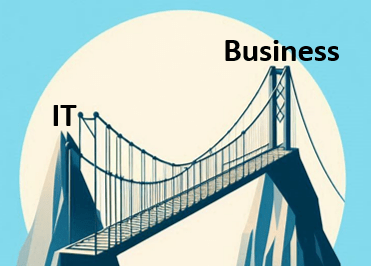
The interdependence between business and IT is undeniable. Leaders who understand that business strategy and IT strategy must be tightly integrated are on the path to success. Leading from the front must bridge the gap between these two worlds. IT executives must grasp the nuances of the business side, while business leaders need to appreciate the capabilities (and limitations) of IT. Organizations can truly innovate and thrive in an increasingly competitive landscape through such a symbiotic relationship.
Leading from the Front
Take the Steering Wheel with Confidence
Leadership is not just about holding a title; it’s about action, responsibility, and the ability to inspire others. Leaders in the driver’s seat set the direction for their teams and make decisions that align with the organization’s overall goals.
Taking the steering wheel with confidence means being decisive yet adaptable. A leader knows when to accelerate toward an opportunity when to slow down to reassess, and when to steer the organization in a new direction entirely. This requires a deep understanding of the strengths and weaknesses, combining internal dynamics with external market conditions.
Visionary Leadership
Leaders must look beyond the immediate horizon while setting a long-term direction for the company. Their traits and talents include anticipating future trends, understanding market shifts, and preparing to pivot with innovation. They must articulate and communicate the direction to motivate the teams and align them across departments.
In the context of business and IT, visionary leadership recognizes – and knows – the potential of technology to transform business operations and processes. Encouraging a culture of continuous improvement, learning, and change must center around innovation.
Building Trust and Credibility
Leaders will earn the trust and respect of their organization by their actions. I’m sure we can agree that trust is the foundation of effective leadership. Without it, even the most well-thought-out strategies can fail. As role models for change, trust will be built by demonstrating integrity, consistency, and transparency in actions and decisions. Open-door policies make it easier to ensure teams interact with their leaders in a transparent exchange of ideas and opinions.
Credibility, on the other hand, is built through the leaders’ competencies. They must demonstrate a deep understanding of their business, the company’s specific challenges, and the technology behind supporting progress and success on all organizational levels.
Credibility also manifests in walking the talking. Leaders must get out to pull opinions and facts across the entire organization.
When teams trust their leader and believe in their competence, they are more likely to follow their direction and ignite the organization’s change culture.
Bridging the Gap Between Business and IT

Cross-Functional Understanding
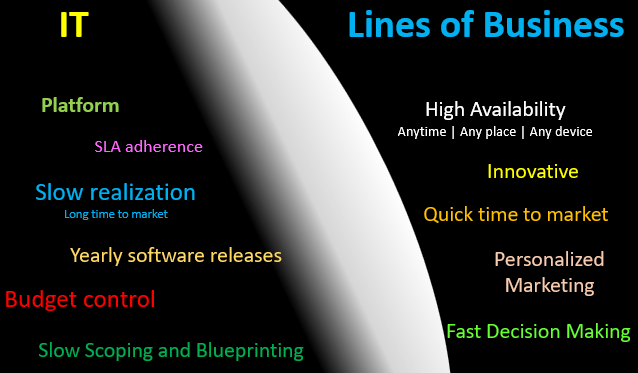
You might doubt there is a gap between business and IT. But I can recite my experiences, and in most customer situations I was involved in, one side didn’t really understand what the other side meant to say. IT executives often lack business understanding (because they are nerds), and business executives don’t care enough about technology and digitization. I identified this phenomenon as the Great Divide in one of my books[1].
Today, leaders must possess competencies in IT and business – the lines between the areas are increasingly blurred. Technology is a critical enabler of business success and is no longer just a support function. And business leaders must understand how technology can drive innovation and integration for the process and data layer.
The recipe for success: business needs to explain their requirements with a “tech flavor,” and IT leaders must have a firm grasp of business strategy and goals to ensure their initiatives align with the organization’s broader objectives.
This cross-functional understanding is not just about knowledge; it’s about empathy, collaboration, and putting themselves into the shoes of others. Breaking down silos and encouraging open communication are traits leaders must possess. There can’t be pure IT initiatives or Business transformation projects without a technology focus. Collaboration across the aisles is the way to go.
Aligning IT with Business Strategy
In my experience, leaders must align first from the business perspective. Empowered with the business goals, they can identify the obstacles and bumps that might prevent achieving them. It’s never a “technology first” exercise. Too often, IT projects are undertaken in isolation, without a connection to the business side of the house.
Once the business goals are understood, leaders must ensure that an IT strategy is being developed to support the business thoroughly. Strong collaboration and communication involving business and IT leaders will lead to a compelling IT strategy during the decision-making processes.
At one point, features and functions need to be discussed. This is the time when technical and business acumen play a differentiating role in the iterative process: IT leaders understand business needs and business leaders appreciate technical capabilities. As such, both sides stay agile and responsive to their opportunities and threats.
Innovation at the Intersection of Business and IT
Innovation is a critical driver of success in any business environment. The most successful organizations can harness the power of technology to create new products, services, and business models. This requires business leaders to think creatively and strategically about leveraging IT to drive innovation.
One innovative methodology to ideate new products and services is Design Thinking. I will dedicate an upcoming blog to this excellent methodology.
Innovation can happen effectively by thinking about personas and their needs. Business leaders typically bring a deep understanding of customer needs, market trends, and competitive dynamics, while IT leaders bring expertise in technology, data, and process optimization. Combining the two areas of strength can unleash new opportunities for growth, efficiency, and differentiation.
Look at the integration of e-commerce platforms with traditional brick-and-mortar operations by Retailers: This has created new opportunities for omnichannel outreach. Strong collaboration between business and IT leaders ensures seamless customer experiences across all channels. A Great Divide can’t exist with successful e-commerce models.
Driving Digital Transformation
Digital transformation is one of the most significant challenges and opportunities facing companies. But the words may sound fluffy and not express much.
Digital transformation involves adopting technologies to change how businesses operate and deliver value to customers fundamentally. One example everybody can understand is that manual work steps in a business process are a showstopper for fully digitized processes.
Digital transformation aims to create fully integrated processes inside or across functional departments to ensure real-time visibility of the respective business area. If you manufacture products, you would know their positions in the assembly line at any point in time, the expected finish time, the customer it will go to, and all the costs associated with the production and supply chain process. Any manual step along the process will destroy full visibility.
Digital transformation requires a clear vision of the benefits and enterprise value. Something must go more efficiently, faster, or require less material to build. To be straightforward: If no problems are identifiable, a digital transformation may not be needed.
However, most of the companies I know require newer and better technology, better integration of processes, and better visibility on the data layer. If leaders see these changes coming, they must also address the inevitable resistance to change that comes with any major transformation effort.
Resistance to change is a natural human response, particularly when it involves new technologies that disrupt traditional ways of working. Therefore, leaders must manage this resistance by providing clear communication, training, and support. Recognizing and rewarding the organization’s early adopters and change champions goes a long way to build momentum for the transformation effort.
Creating a Culture of Continuous Improvement
Digital transformation is not a one-time event; leaders must create a culture that encourages experimentation, prototyping, and learning. Continuous improvement also means staying current with the latest technological advancements and ensuring that IT infrastructure is regularly updated and optimized (see also my last blog). Leaders must provide training and access to new tools to ensure their teams have the necessary resources and support.
Measuring Success and Accountability
One of the critical aspects of transformation is measuring success and holding teams accountable for results. It’s required to set clear goals and KPIs for business and IT initiatives and regularly track progress.
Leaders must also be willing to make decisions when initiatives don’t show the expected results or are just too slow and far behind schedule. Reallocating resources, adjusting strategies, or even canceling projects are decisions to evaluate and execute.
By focusing on results and accountability, leaders ensure that their teams remain aligned with the organization’s overall goals and objectives.
Overcoming Challenges
Managing Risk and Uncertainty
Bridging business and IT also means managing risk and uncertainty. On both sides, there are always risks associated with technical failure, market rejection, or operational disruption. Leaders must be adept at identifying, assessing, and mitigating these risks.
Risk management involves a combination of strategic planning, contingency planning (“Plan B”), operational planning (“focus on no-regrets items”), and real-time decision-making. Based on experience or advisory councils, leaders must anticipate potential challenges, develop plans to address them and make informed decisions quickly when unexpected issues arise. This requires a deep understanding of both the business environment and the technological landscape.
Balancing Short-Term and Long-Term Goals
The pressure to deliver immediate results puts leaders on a balancing act between short-term and long-term goals. However, we know that focusing too much on short-term gains is not strategic and typically leads to deficiencies and future misalignment.
Leaders must strike a balance between short-term results and long-term investments, involving trade-offs between immediate business needs and longer-term strategic initiatives, such as digital transformation versus innovation projects.
Bridging Business and IT
Bridging business and IT is more than just making decisions; it’s about changing the perception of IT on the business side. It’s driving innovation and transformation for business with technology. The leader requires a combination of visionary leadership, cross-functional business understanding, and a solid technical background.
Leaders who embrace bridging both sides understand that success in today’s business environment requires technical expertise and business acumen. It requires the ability to connect strategy with execution, business needs with technological solutions, and short-term results with long-term success.
These bridging leaders ensure that their companies remain agile, competitive, and prepared for the challenges and opportunities of the future. Whether through digital transformation, innovation, or simply improving day-to-day operations, these leaders can steer their organizations toward success while keeping one foot in the world of business and the other in IT.
The conclusive question: Can one learn about bridging business and IT? My experience tells me two colors of answers.
No, leaders can’t learn – I saw many trying. And as hard they tried, they missed one essential ingredient: empathy. And empathy is like a gift or talent. No certification can make it up.Yes, leaders can get better. I saw a few succeeding because they weren’t initially aware of their talent for empathy. But eager to learn, and after coaching and explanations, they could walk on their own – bridging the IT and business sides.
 ERP Strategies
Leave a comment