
DesignThinking is an innovation methodology that motivates creativity and ideas to drive out-of-the-box thinking.
Design Thinking aims to develop innovative, user-centered solutions to complex problems by profoundly understanding the target users’ needs, challenges, and experiences. It emphasizes empathy, creativity, collaboration, and iterative refinement to ensure the final solution is effective and practical. Key objectives include:
- Understanding the User: Gaining deep insights into the user’s problems and pain points through empathy-driven research.
- Encouraging Creativity: Generating diverse ideas without constraints to explore multiple possibilities.
- Rapid Prototyping and Testing: Creating and refining solutions quickly to validate their effectiveness with real users.
- Driving Innovation: Breaking away from traditional thinking to discover unique approaches and impactful solutions.
- Ensuring Practicality: Developing solutions that can be feasibly implemented and adopted in real-world contexts.
Ultimately, Design Thinking seeks to align user needs, business goals, and technological possibilities to create meaningful, user-focused outcomes.
How Does Design Thinking Work?
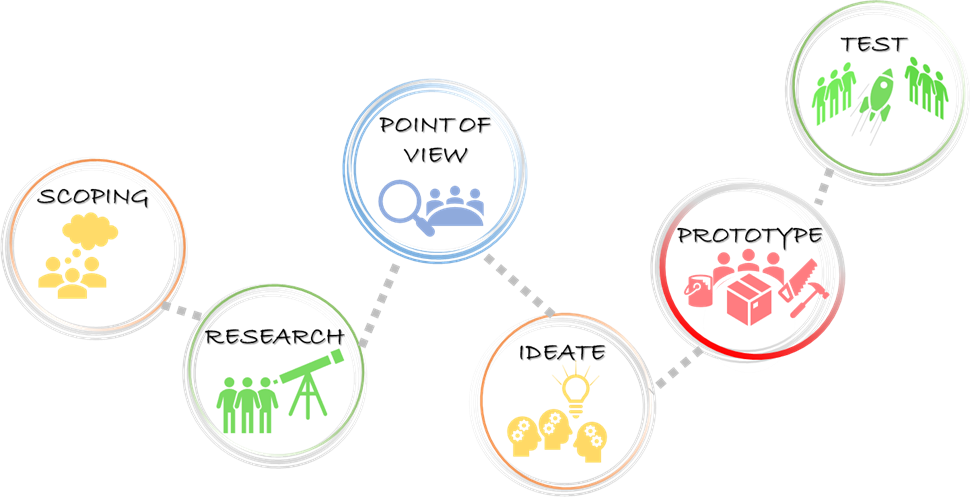
Design Thinking is a structured methodology divided into two main stages: the Problem Stage and the Solution Stage.
The first phase focuses on the definition of the problem. It identifies the target user, or Persona, who faces the problem. By researching the situation, in-depth information about the Persona is being collected (through interviews, observations, and other means).
The first stage culminates in a concise problem statement that clearly defines the issue that needs to be addressed.
The second phase starts with brainstorming ideas and generates a wide range of creative ideas for solving the problem identified. A prototype provides the first glimpses of its solution efficacy. Constant feedback loops with the persona are built into the methodology.
Once the prototype shows its viability in solving the problem, the development of the finished product can start using rapid development cycles.
Problem Stage
Scoping. The first step of the methodology involves identifying the person carrying the problem. This target person is called a Persona. A Persona could be your client, customer, end-user, or any other person facing an issue that needs to be solved.
During the first step of Scoping, you think about the Persona’s life surrounding the problem and try to get as much information about the Persona and the specific situation. Within this first step, no generalizations and no assumptions are allowed. You need to stick to the Persona’s situation as close as possible. This step requires the most significant amount of empathy.
To motivate empathy, get yourself into the Persona’s shoes and provide them with a specific name, family situation, and work situation surrounding the problem.
Research. The second step of the methodology involves gathering all the situational facts about the selected Persona. Interviews and real-life observations help to learn about the Persona. Researching the web, libraries, literature, and any available public information also helps to create a picture of the Persona.
The main objective of the research step is to identify the Persona’s problems and difficulties. We often investigate a person’s day-in-life scenarios to get to the pain points. Again, putting yourself in the persona’s shoes provides a crucial and fundamental step to understanding the problem. This step is often underestimated in its importance to the overall success of the Design Thinking methodology.
Point of View. The third step summarizes all the insights (pain points, obstacles, hurdles, etc.) learned about the Persona and provides a crisp problem statement, the Point of View. This Point of View describes the problem that needs to be solved within the Solution stage.
Solution Stage
Ideate. All creativity should be unleashed within the first step of the Solution stage, the ideation step. This step lets the ‘brains storm’ and generate wild ideas.
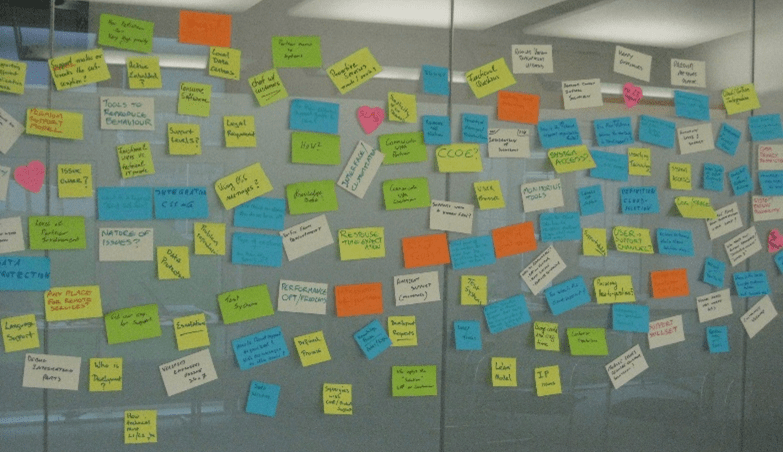
The leading assumption during this step is that there are no constraints, no limits, no boundaries exist, and no frameworks hinder. The only leading rule during this stage is to allow any idea and thought that comes to mind. Once the ideas are born and documented on Post-its, the ideas are bundled, prioritized, and summarized.
Prototype. The prototype step may take longer. The main ideas gathered and produced within the previous step are put forward for realization. Quick and dirty prototypes are built and eventually evaluated with the Persona from step one.
If the prototype helps the Persona and s/he agrees with the solution, the prototype version will be used in the last step of the Design Thinking methodology.
Test. The prototype must be transformed from its ‘quick and dirty’ approach to the company’s development process. It must be converted and developed as a full-scale product. Using short spring development cycles to create a real product version of the prototype is crucial for time-to-market.
If the solution proposal is complex, plan for different versions or releases of the final product using rapid development and delivery cycles. Thorough final product testing is critical for long-term profitability and adoption by users and customers.
Showcase: Design Thinking in Manufacturing
It is user-centric. Design Thinking centers around the end-users (employees, customers, partners) and focuses on their problems and needs. User-centricity ensures that the products manufactured are more likely to meet customers’ expectations, leading to higher satisfaction, loyalty, and more substantial revenue.
It is innovative. Design Thinking encourages innovation on the foundation of your teams. They generate diverse ideas and challenge existing assumptions. Innovation can lead to developing unique and better products, giving you a competitive edge in the market.
It improves processes. Design Thinking improves manufacturing processes by identifying inefficiencies and pain points along the business process. Business process analysis leads to more efficient and cost-effective processes, positively impacting productivity and cost structure.
It enforces collaboration. Design Thinking brings your employees together and fosters team collaboration across business lines. Collaboration taps into the combined brain power of product designers, line workers, builders, and customer support associates, leading to better understanding and alignment.
It reduces risks. Design Thinking prototypes and tests product solutions on a small scale. Feedback and changes from these test cycles will improve your product, and you will be ready to go into full production mode, confident that your innovations work.
Summary
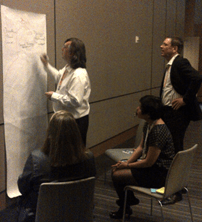
Describing the Design Thinking methodology on a theoretical level does not provide you with the real innovation power this methodology embraces. Therefore, we encourage you to participate whenever you can attend a Design Thinking workshop.
The Design Thinking methodology can be applied to all industries and LoBs within enterprises. My experience with Design Thinking spans marketing and beverage companies to wholesalers, high-tech companies, oil and gas enterprises, airport operators, consumer goods companies, banks, software companies, and manufacturing companies.
Andreas Graesser © 2025
More information:
 ERP Strategies
Leave a comment